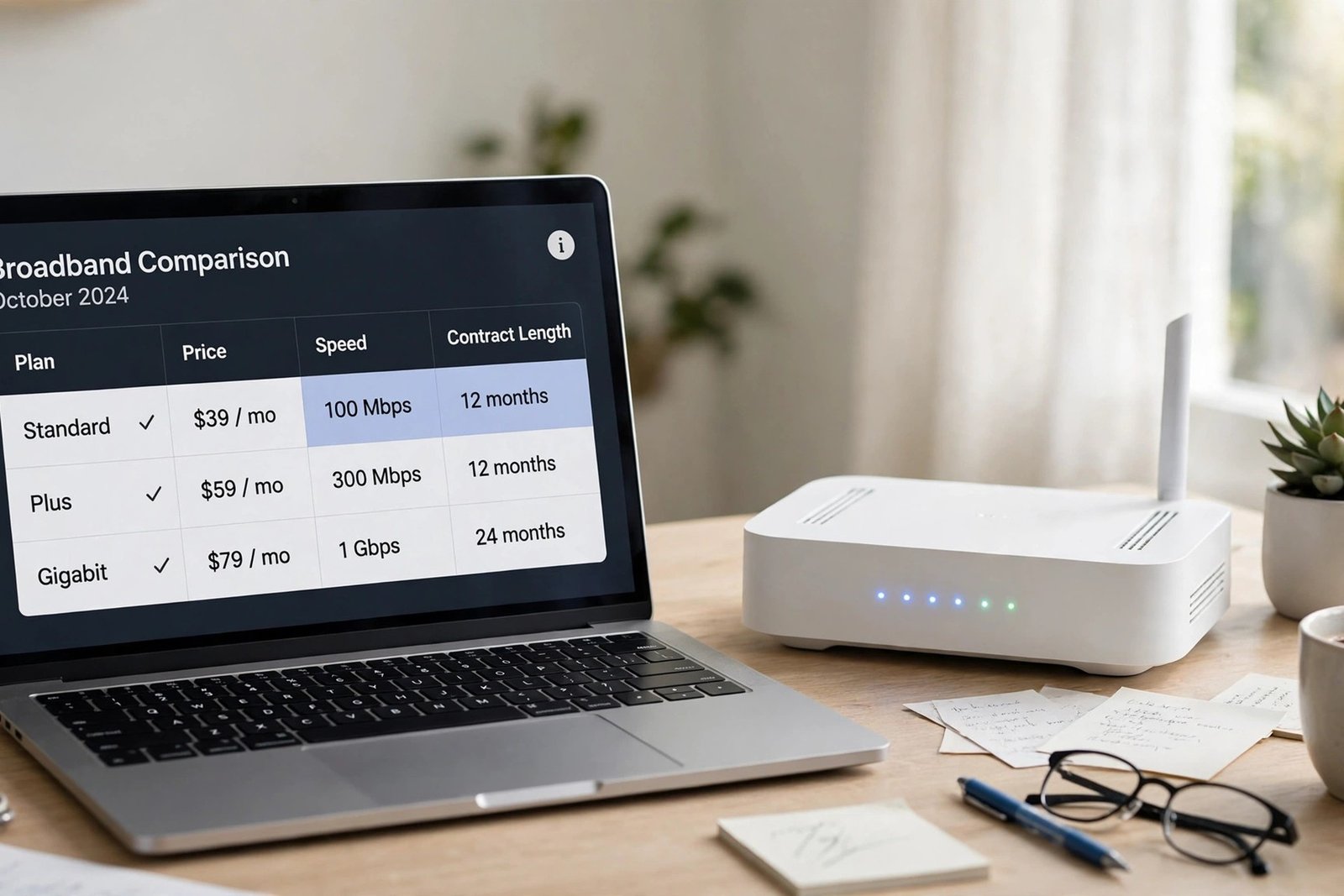
Every broadband provider advertises a tempting headline price, yet two deals that both say “£25 a month” can differ by more than a hundred pounds over the life of the contract. Broadband offers are designed to be compared quickly — by the biggest number on the advert — but the savings go to people who compare them slowly. This guide shows you exactly what to check: the true total cost, the speed you will actually get, the price rises hiding in the small print, and how switching provider works in the UK now that the process has been made much simpler.
Why the Headline Price Is Only Half the Story
The monthly price in the advert is real, but it is only one part of what you will pay. A complete broadband offer also includes:
- Setup and activation fees — sometimes free, sometimes £20 or more, and often different for the same package on different comparison sites.
- Delivery and equipment charges — a postage fee for the router is common, and premium routers can cost extra.
- The contract length — 12, 18 or 24 months. A cheaper monthly price on a longer contract can cost more overall than a slightly pricier short one.
- The price after the contract ends — many deals jump to a much higher standard rate once the minimum term finishes. That jump is where loyal, out-of-contract customers lose the most money.
- Mid-contract price rises — covered in detail below, because they change what “£25 a month” really means by year two.
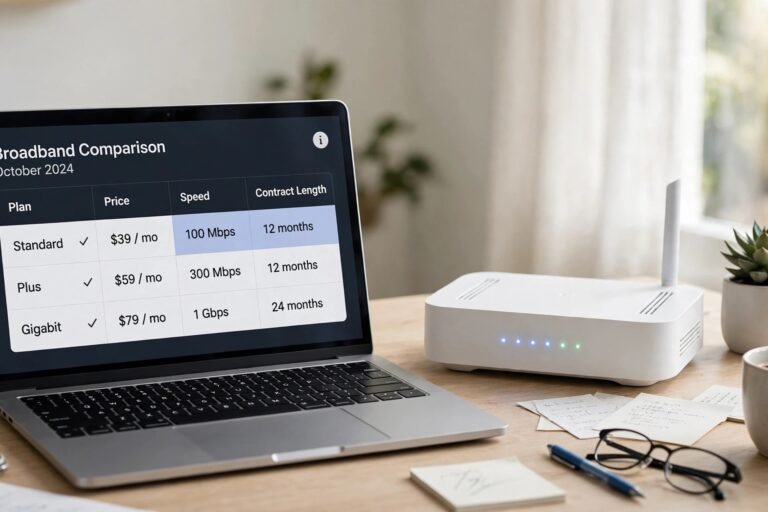
The reliable way to compare is the total cost over the minimum term: monthly price multiplied by the number of months, plus all one-off fees, adjusted for any announced price rise. A worked example makes this clear. Deal A is £24 a month for 18 months with no setup fee: £432 in total. Deal B is £22 a month for 24 months with a £20 setup fee: £548 in total. Deal B looks cheaper in the advert and costs £116 more — and keeps you locked in for six months longer. (These are illustrative figures, not live offers; always run the same sum on the real deals in front of you.)

How Much Speed Do You Actually Need?
Providers sell speed in megabits per second (Mbps), and bigger numbers cost more. Most households buy far more than they use. As a practical guide: a single person browsing, emailing and streaming in HD needs around 30–40Mbps. A family streaming on several screens, with video calls and gaming, is well served by 100–150Mbps. Very large households, heavy downloaders and people uploading large files for work benefit from 300Mbps and above.
Two cautions. First, the speed that matters is the one at your address, not the package maximum — every provider must give you a personalised speed estimate before you buy, and a guaranteed minimum; if your speed stays below that guarantee, you have the right to leave without a penalty. Second, full fibre (fibre to the premises) is both faster and more reliable than older part-fibre connections, so if a full fibre offer and a part-fibre offer cost similar money, full fibre is usually the better long-term choice.
The Checklist: What to Compare in Any Broadband Offer

- Total minimum-term cost — not just the monthly figure, as shown above.
- Contract length and exit fees — shorter contracts give you freedom sooner; early exit fees can be steep if you move home or your circumstances change.
- Price-rise terms — see the next section. Two otherwise identical offers can differ greatly here.
- Speed estimate and minimum guarantee for your address — in writing, before you commit.
- Router quality — a modern router with current wifi standards makes a visible difference to coverage around the home, and it is included in some offers but an upsell in others.
- Extras, honestly valued — reward cards, gift vouchers and free months only count if you would have wanted them anyway; subtract their genuine value from the total cost, not their headline value.
- Customer service record — when broadband breaks, support quality matters more than a pound a month. Published complaint figures exist for the large providers and are worth a glance.
Mid-Contract Price Rises: The Detail That Changes Everything
UK broadband contracts have traditionally risen in price each spring. Under current Ofcom rules, providers must state any mid-contract rise clearly in pounds and pence before you sign up, rather than linking it to inflation formulas you cannot predict. That makes comparison fairer — but only if you use the information. When you compare two offers, add the stated rise to the months it will apply to. A deal that starts £2 cheaper can end up the more expensive of the two if its rises are bigger or start sooner. Also note the date your contract ends: setting a reminder a month before the end date is the single most valuable broadband habit there is, because the out-of-contract price is rarely competitive.
When Are the Best Broadband Offers Available?
Providers compete hardest at predictable moments: the big retail periods such as Black Friday and January sales, the back-to-school and student season in late summer, and whenever a rival launches an aggressive deal in your area — particularly when full fibre networks are newly switched on locally. That said, waiting months for a sale while paying an inflated out-of-contract price usually costs more than switching now at a good standard offer. The maths is simple: every month at £15 over the odds costs more than most sale discounts save.
Switching Is Easier Than It Used to Be

Fear of hassle keeps many people overpaying, but switching between UK broadband providers is now handled by a system called One Touch Switch. For most switches you simply place an order with your new provider and they arrange the switch with your old one — you do not need to phone your current provider to cancel, and the changeover is planned for a set date. Before you switch, check three things: that you are out of contract (or that the saving beats the exit fee), that your new provider’s speed guarantee at your address is acceptable, and whether you need to return the old router to avoid a charge.
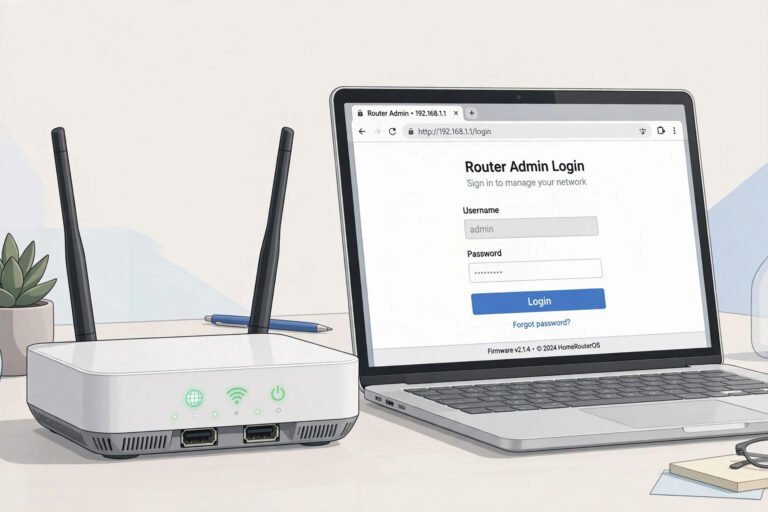
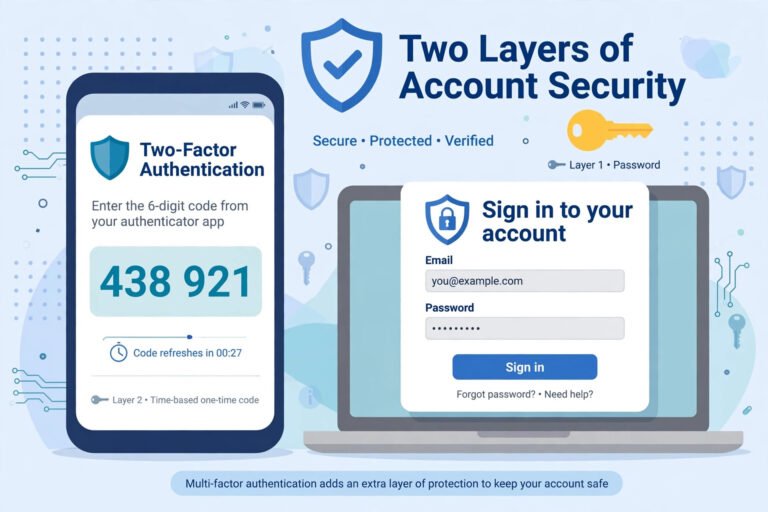
On installation day, your new router will arrive with default network names and passwords printed on its label. One of the first jobs is to log in to the router and set your own wifi name and a strong admin password — our step-by-step guide to logging in to your router admin page walks through it. And when you create your account on the new provider’s website, use a unique password rather than one you already use elsewhere; a password manager will generate and store one for you.
Frequently Asked Questions
What is the difference between a broadband offer and the standard price?
An offer is the discounted rate for new customers during the minimum contract term. The standard price is what the package costs once that term ends — often considerably more. The gap between the two is why reviewing your deal at the end of every contract matters.
Can I leave my broadband contract early if I find a better offer?
Usually only by paying an early exit fee, which is based on the months remaining. Two exceptions: if your provider raises prices beyond what was stated when you signed up, you may gain the right to leave free of charge; and if your speed stays below the guaranteed minimum and the provider cannot fix it, you can leave without penalty.
Is a longer contract ever the better deal?
Sometimes. A 24-month contract protects you from two rounds of shopping around and can carry a lower monthly price. It is the better deal when the total cost over 24 months beats two shorter deals and you are confident you will stay at the address. Always compare totals, not monthly figures.
Do comparison-site offers differ from going direct?
They can. Comparison sites sometimes carry exclusive prices or larger reward cards for the same package. It takes two minutes to check the same deal both ways, and the total-cost calculation above tells you which is genuinely cheaper.
Conclusion
Good broadband offers reward a few minutes of arithmetic. Work out the total cost over the full minimum term, match the speed to what your household actually uses, read the price-rise terms in pounds and pence, and value extras only at what they are worth to you. Then let One Touch Switch do the boring part of changing provider. Finally, put your contract end date in your diary — in UK broadband, the most expensive deal is almost always the one you never got round to renegotiating.
About the Author