
Ask ten people to name the best broadband provider in the UK and you will get ten different answers, because the right provider depends on your home, your household, and what you actually do online. A provider that is superb for a single person in a city flat may be a poor fit for a large family in a rural village, and a provider with the fastest headline speed may still frustrate you if its router is weak, its support is hard to reach, or its connection drops at the worst moments.
This guide takes a different approach from a deals comparison. Instead of ranking providers by their latest promotions, it explains how to judge a provider by the things that shape your everyday experience: reliability, the speed you actually get at your address, the quality of the router, the standard of installation, and the help you receive when something goes wrong. Work through it in order, and you will end up with a shortlist that fits your home rather than someone else’s.
Start With Your Household, Not With a Provider
The best provider for you starts with an honest picture of how your household uses the internet. A home where one person browses, emails, and streams in the evening has very different needs from a home where several people work from home, join video calls all day, game online, and stream on multiple screens at once. A household with children doing schoolwork online, or with family members who depend on a steady connection for health or caring reasons, needs reliability above everything else.
Write down, briefly, what matters most in your home: how many people are online at the busiest time, what they are doing, whether anyone works from home, and whether the connection is needed in every room or mainly in one or two. That short list becomes your test for every provider you consider. If a provider cannot serve the busiest hour in your home, it does not matter how good it looks at quiet times.
Also consider your home itself. A small flat with the router in the middle of the living space is easy to cover with wifi. A large house, a house with thick walls, a home spread over several floors, or a home with a garden office will need more thought about coverage, and the router and support a provider offers become much more important. The right provider for a large house is often the one whose equipment and advice actually solve coverage, not the one with the most attractive headline claim.

Reliability Matters More Than a Headline Speed
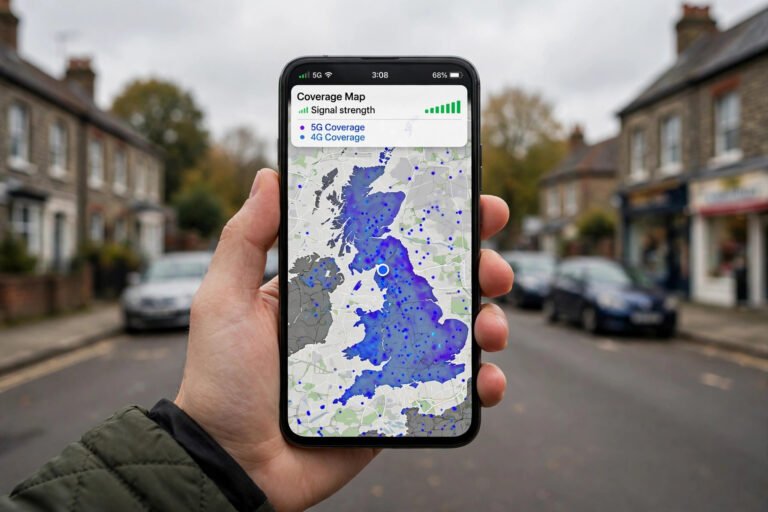
Providers advertise a maximum or typical speed for each package, but the number that shapes your life is the speed and steadiness you get at your address, at busy times, day after day. A connection that is fast at quiet times but struggles every evening, when neighbours are also online, will feel worse than a steadier connection that never reaches the same peak. When you compare providers, ask what speed is estimated for your address specifically, and whether that estimate comes with a guaranteed minimum that you can rely on.
The type of connection available at your address matters here too. Full fibre, where fibre runs all the way into the home, is generally steadier and better equipped for busy households than older connections that rely on ageing copper wiring for the final stretch. If full fibre is available at your address, it is usually worth giving it serious weight in your decision, even if a provider’s older connection looks similar on paper. If full fibre is not yet available where you live, the quality of the provider’s service on the connection you can get matters even more, and local experience becomes a valuable guide.
Ask neighbours, friends on the same street, and local community groups about their experience, not just their speed. Do their connections drop? Do video calls freeze in the evening? Does the connection recover quickly after a fault? Patterns in those answers tell you more about a provider’s local reliability than any national ranking, because broadband performance is ultimately local: it depends on the network serving your street, not on a national average.
The Speed You Actually Need
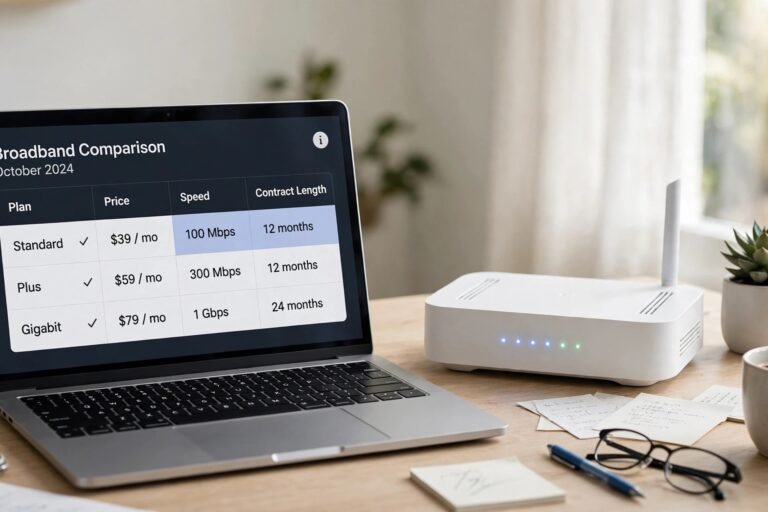
More speed is not automatically better, and paying for far more than your household uses does not make everyday browsing feel faster. Light use — browsing, email, social media, and occasional streaming — is well served by a modest connection. A busy family household, with several streams, video calls, and gaming happening at once, needs a stronger connection so that one person’s video call does not stutter because someone else started a download. A home with people uploading large files for work, or with a home office that depends on video all day, needs a connection that is strong in both directions, not just for downloads.
The practical test is your busiest hour, not your average hour. Think about the evening when everyone is home, or the working day when calls and uploads overlap, and choose a provider and package that handles that peak comfortably. If you are unsure, start from what your household does at its busiest and choose accordingly, rather than from the largest number in an advert. A provider that gives you a realistic estimate for your address, and explains it plainly, is already showing you something valuable about how it treats customers.
Router Quality: The Box That Decides Your Wifi
The router is the one piece of equipment every provider supplies, and it makes a bigger difference than most people expect. A good modern router, with up-to-date wifi standards, can cover a home evenly, handle many devices at once, and keep a steady connection as you move from room to room. A weak or dated router can leave dead spots, struggle when several devices connect at once, and make an otherwise good broadband line feel slow — a problem people often blame on the provider’s network when the router is the real culprit.
When you compare providers, ask what router is included, whether it is the provider’s current model, and what happens if you need better coverage. Some providers offer mesh wifi systems — additional units that extend coverage around larger homes — either included or as an option, and for a large or awkwardly shaped house that can matter more than a small difference in line speed. Also ask whether you can use your own router if you already own a good one, and whether the provider will support you if you do, since policies on this vary.
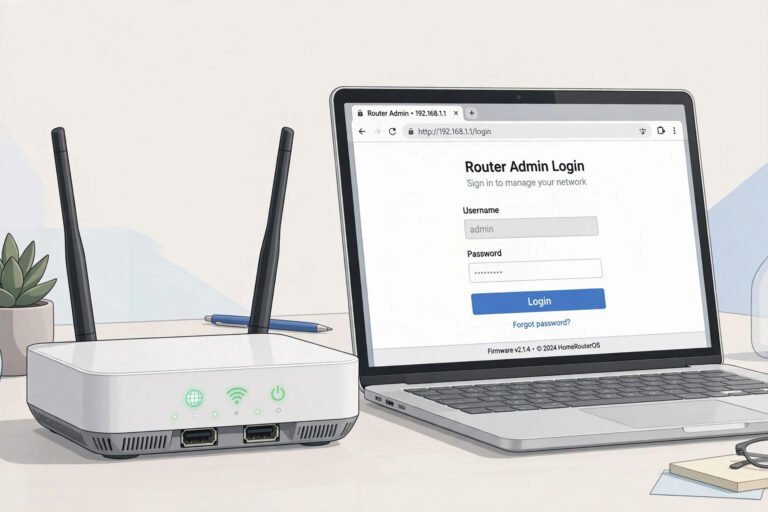
Once you are set up, the router settings are worth knowing your way around, from changing the wifi name and password to checking which devices are connected. Our guide to log in to your router admin page walks through reaching your router settings step by step, which is useful whatever provider you choose and whichever router they supply.

Installation: The First Impression That Predicts a Lot
Installation is where a provider’s organisation shows itself first. A good installation means a clear appointment, an engineer who arrives when promised, a tidy job, and a connection that is tested before the engineer leaves, with the router placed where it will give the best coverage rather than simply where it is easiest to install. A poor installation, by contrast, can leave you with a router tucked in a corner, a connection nobody tested properly, and a problem that takes weeks of phone calls to untangle.
Before you commit, ask what installation involves at your address. Does it need an engineer visit, or is it a self-installation with equipment sent by post? If an engineer is needed, how are appointments booked, and what happens if the visit needs to be rearranged? If you already have a connection at the address, will there be a gap in service during the changeover, and how is that managed? Clear, specific answers to these questions are a good sign. Vague answers, or pressure to commit before your questions are answered, are a warning.
Also think about the practical side of the changeover itself: the devices in your home that will need to reconnect, the wifi name and password you will want to set, and any smart home devices, printers, or cameras that depend on the network. Setting aside time on installation day to reconnect everything and test each room saves a week of small frustrations later, and it is the right moment to check that every part of the house is covered.
Customer Service: The Test You Hope You Never Need
Every provider looks good while the connection works. The difference appears when it breaks. Customer service is therefore one of the most important things to compare, and one of the easiest to research before you commit. Published complaint figures for the large providers give a rough picture of how often customers need to complain and how well those complaints are handled. Independent reviews, and the experiences of people you know, add local detail that national figures cannot.
Look for specifics rather than star ratings alone. Can you reach support by phone, chat, or both, and at hours that suit you? Is there a clear faults process, with updates while a fault is investigated, rather than silence until you chase? Are support staff able to run tests on your line and router, or do they simply read from a script? And when a fault is the network’s responsibility, does the provider keep you informed about progress and expected resolution, or leave you to guess? These are the questions that matter on the evening your connection fails during an important call.
It is also worth checking how a provider handles vulnerable customers, customers who depend on a landline or a monitored alarm, and customers who need extra help with installation or equipment. A provider that has thought about these situations, and can explain its support clearly, is usually a provider that has thought about customer service in general, not just about sales.

Contract Flexibility and What Happens Afterwards
Broadband contracts vary in length and flexibility, and the right choice depends on how settled your life is. A longer contract can suit a household that expects to stay at the same address and wants stability, while a shorter or more flexible arrangement suits someone who may move, whose household may change, or who wants the freedom to reconsider sooner. Neither is universally better; the mistake is choosing a length by default rather than by thinking about your own plans.
Ask, before you commit, what happens if you move house during the contract, what happens if your circumstances change, and how you can leave at the end of the term. A provider that explains these things plainly, in writing, before you sign up is easier to trust than one that leaves them buried. Also ask how you will be told about changes to your service during the contract, and how you can check your current terms at any time. Clarity here prevents most of the disputes that arise later.
When you do set up a new account, treat it like any other important online account: use a unique password you do not reuse elsewhere, and keep the account details somewhere safe. Our guide to using a password manager explains how a password manager creates and stores strong, unique passwords, which makes managing your provider account, and every other account, far easier and safer. If you are comparing deals themselves rather than providers, that is a separate exercise: see our guide to broadband offers, which covers comparing UK broadband deals by total cost and contract terms, while this guide stays focused on judging the provider behind the deal.
Choosing for Particular Situations
Different households should weight the factors above differently. A household that works from home should put reliability and support first, because a failed connection during a working day costs more than a slow evening stream. A rural household, where fewer providers may serve the address and full fibre may not yet be available, should put local availability and honest speed estimates first, and should be wary of any provider that cannot give a clear estimate for that exact address.
A household with gamers or heavy uploaders should ask specifically about steadiness and upload performance, not just download speed, since gaming and video calls suffer most from instability rather than from a lack of peak speed. A household on a tight budget of attention rather than money — for example, older relatives or anyone who wants broadband to simply work without constant attention — should put a good included router, simple setup, and reachable support above every other factor. The best provider is the one that fits the household in front of you, not the one that tops a generic list.
Finally, remember that your choice is not permanent. Broadband is a service you can revisit when your contract allows, when your household changes, or when a better network reaches your street. Choosing well now matters, but so does keeping a note of what worked and what did not, so your next choice is even better informed. A provider that served you well deserves loyalty; a provider that did not deserves to be reconsidered, however convenient staying put may feel.
Frequently Asked Questions
Is the provider with the fastest advertised speed always the best?
No. The advertised speed is a maximum or typical figure, not a promise for your address at busy times. Reliability, the speed estimated for your address, router quality, and support matter at least as much, and a steadier provider often gives a better everyday experience than a faster-on-paper one.
Does it matter which provider I choose if they all use the same network?
Yes, in several ways. Providers that share wholesale network infrastructure can still differ in the router they supply, the packages they offer, the customer service they provide, and how they handle faults and installation. The underlying line may be similar, but the service wrapped around it is not.
Should I choose a provider based on reviews alone?
Reviews are a useful starting point, but they need context. A provider can have many unhappy reviews simply because it has many customers, and individual reviews often reflect one bad fault rather than typical service. Combine published complaint figures, reviews, and the experience of people on your street for a balanced picture.
What is the single most important thing to check before choosing?
The estimate and guarantee for your address, combined with the provider’s local reliability. If a provider cannot give you a clear, specific picture for your home, or if neighbours on the same street report repeated problems, that tells you more than any national ranking or headline claim.
Conclusion
The best broadband provider for your home is not a name on a list; it is the provider whose reliability, router, installation, and support fit your household, your house, and your busiest hour online. Start from how your household actually uses the internet, check the estimate for your address rather than a headline speed, weigh router quality and customer service as seriously as speed, and ask plain questions about installation and flexibility before you commit. Judged that way, the choice becomes clearer — and the provider you choose is far more likely to be one you are still happy with long after the installation engineer has left.
About the Author